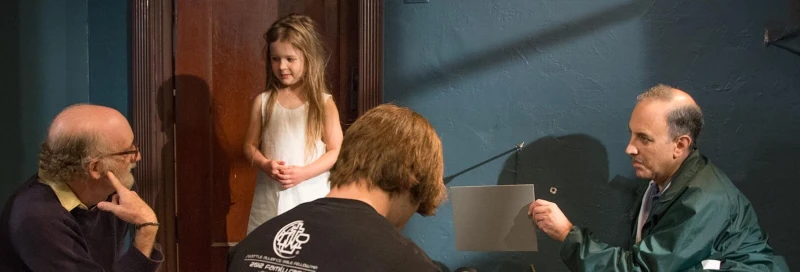
From Pressure to Play: How Kids Truly Perform on Set
Working with child actors isn’t about discipline—it’s about trust, comfort, and creativity.
In this exclusive interview, Hank Isaac, Writer/Director at Andolina • Isaac Entertainment, shares a refreshingly honest perspective on what actually works when directing kids.
His approach challenges traditional ideas of “professionalism” and instead focuses on something far more powerful: letting children be themselves.

What Makes a Child Easy to Direct?
According to Hank, the biggest mistake adults make is over-formalizing the set.
When kids feel like they’re in a rigid, high-pressure environment, their performance suffers instantly. Instead, he removes that pressure completely.
One simple trick?
He doesn’t even say “Action.”
The kids do.
This small shift changes everything:
- Kids feel involved, not judged
- They stop overthinking performance
- They stay present in the moment
The result: more natural, believable acting.
When Do Kids Thrive on Set?
Children naturally want to “do well”—but that desire can quickly turn into pressure.
Hank explains that the kids who succeed are the ones who feel:
- Free to explore
- Safe to make mistakes
- Encouraged to play
When that pressure disappears, something shifts.
The performance stops being forced—and starts becoming real.
What Should Parents Expect on Set?
A professional set doesn’t have to feel serious.
In fact, it shouldn’t.
Hank emphasizes that the best environments feel:
- Creative
- Flexible
- Playful
He also highlights something important:
Most of the real work happens during casting.
If the right child is chosen for the role, filming becomes:
- Exploration instead of correction
- Discovery instead of pressure
Signs a Child May Not Be Ready Yet
Not every child is immediately comfortable on set—and that’s okay.
Some warning signs include:
- Feeling overwhelmed by expectations
- Becoming overly self-conscious
- Struggling with unpredictability
If a child feels like they’re constantly being evaluated, they’ll tighten up—and that tension shows on camera.
There’s no rush. Readiness comes with time.
What Parents Should (and Shouldn’t) Do
This is where most well-meaning parents get it wrong.
Trying to “help” often sounds like:
- “Remember your lines”
- “Don’t mess up”
- “Listen carefully”
But according to Hank, none of that helps.
His advice is simple—and surprising:
Step back.
Parents should:
- Be available for support
- Celebrate wins
- Stay in the background
Too much coaching creates self-consciousness—and that kills authenticity.

How Directors Guide Young Performers
Young actors already know their lines—which can make performances feel rehearsed.
So Hank focuses on helping them rediscover the moment.
Sometimes, that means doing something unexpected.
In one scene, two kids were too tense—so he sent them outside to run and play.
When they came back out of breath, they delivered the best take.
Why?
Because tension was gone—and truth replaced it.
What Directors Look for in Child Actors
Forget perfection.
The qualities that truly stand out are:
- Authenticity
- Playfulness
- Curiosity
- Trust
When a child feels safe enough to experiment, their performance becomes natural—and memorable.
Why This Approach Matters
Hank Isaac’s philosophy is clear:
- Less pressure = better performance
- Less control = more authenticity
- Less perfection = more truth
For families using platforms like KidsCasting, this is an important reminder:
Success doesn’t come from pushing harder.
It comes from creating the right environment.
Final Takeaways
If you remember one thing, let it be this:
Children don’t need to be more “professional.”
They need to feel more comfortable.
When kids feel safe, relaxed, and free to explore, they don’t just act.
They become.